homepage of piotr korsak

Tumblr ↗

Category: content writing

  • Wpis blogowy dla czeskiej firmy Sewio.

    Wpis blogowy utworzony dla czeskiej firmy Sewio, działającej w dziedzinie Ultra-wideband.


    Join the Ultra-wideband (UWB) revolution: how Sewio’s best-in-class solution helps your business grow

    1-minute takeaway:

    • It is proven that only UWB produces sub-meter accuracy with 99%+ reliability in metallic industrial environments
    • Currently valued at $3.9 billion, the Real-Time Location Systems (RTLS) industry, including UWB technology, is projected to reach an impressive $39 billion by 2030
    • Sewio’s strategic approach is a low-complexity, cost-effective partner-based solution
    • Sewio, providing its Ultra-Precise Positioning Solutions with the unique Ultra-wideband (UWB) location technology, will help your business become a future-proof enterprise

    A short history of UWB solutions

    The history of the UWB technology starts in 2007. Only two significant companies entered the market, which was relatively small and closed. In 2014, the market expanded – this is also when Sewio was founded. Another leap, in 2018 Apple introduced its breakthrough technology, resulting in a huge technological boom. Many more companies successfully entered a finally established, competitive industry. Since then, we have observed trends that are going to shape the future:

    • wide commercial adoption
    • chips production from millions to billions yearly
    • lower production prices per chip
    • chips are better, and more feature-rich
    A simplified timeline of the UWB market

    Key benefits of UWB technology

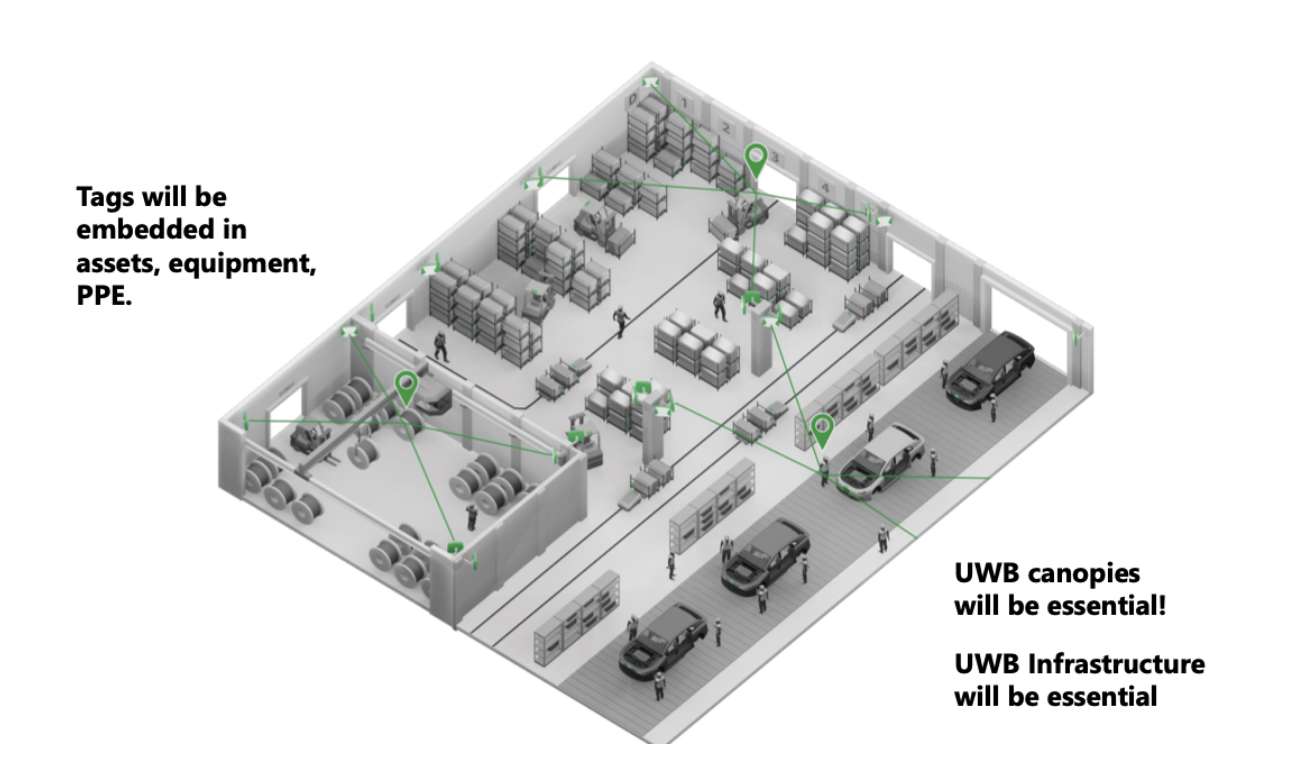
    Ultra-wideband canopies have emerged as a pivotal and highly anticipated development within the industry. Much like how WiFi serves as the connectivity backbone, ultra-wideband canopies will become the essential infrastructure for tracking assets. Market reports underscore a substantial growth potential for Real-Time Location Systems (RTLS) and ultra-wideband technology in general. 

    We identify these benefits as crucial, giving your enterprises a competitive advantage:

    • Precise Asset Tracking
      Automotive companies can use UWB technology to precisely track the location of vehicles, tools, and equipment within their facilities. This enables efficient inventory management and reduces the risk of asset loss or theft.
    • Increased Safety
      In manufacturing, UWB technology enhances safety by monitoring the movement of people and machinery. It can detect potential collisions or unsafe behaviors, allowing for timely interventions to prevent accidents.
    • Improved Production Efficiency
      UWB technology provides real-time data on the location and status of manufacturing components, allowing companies to optimize production processes, reduce downtime, and enhance overall efficiency.
    • Enhanced Quality Control
      In manufacturing, UWB can be used for tracking components and monitoring quality throughout the production line. This ensures that products meet quality standards and reduces defects.
    • Reduced Cable Clutter
      In cabling, UWB technology can replace traditional wired connections, reducing cable clutter and maintenance costs. It simplifies the installation of networks and provides flexibility for reconfiguring layouts.
    • Increased Automation
      UWB enables automation in manufacturing and automotive processes. It can be integrated into autonomous vehicles, robotic systems, and conveyors to optimize material handling and transportation.
    • Real-time Analytics
      All three industries can benefit from real-time analytics made possible by UWB technology. It provides valuable data on asset utilization, production efficiency, and worker productivity, enabling data-driven decision-making.
    • Enhanced Security
      UWB offers improved security by enabling precise access control and monitoring. It can restrict unauthorized access to sensitive areas within manufacturing plants or automotive facilities.

    Future of Indoor Positioning Market

    In the ever-promising indoor positioning market, Sewio emerges as a pivotal player.

    Wide usage of UWB canopies indoors

    Recognizing the growing need for real-time asset tracking, improved safety measures, and enhanced analytics, Sewio is set to meet these demands and play a central role in shaping the future of industries like automotive and manufacturing. By envisioning UWB as an essential infrastructure, Sewio’s commitment aligns with market forecasts, making it a significant contributor that empowers businesses across sectors and drives the widespread adoption of UWB technology.

    Sewio offers a state-of-the-art, enterprise-focused solution

    Sewio’s strategic approach can be described as a low-complexity, cost-effective partner-based solution.

    This strategic positioning enables Sewio to meet the soaring demand for UWB integrators and solutions. With visionary leadership and robust market data support, Sewio addresses the significant demand for UWB technology.

    We look positively into the market projections, with an estimated compound annual growth rate (CAGR) of 18% to 25% for the Real-Time Location Systems (RTLS) industry, which also encompasses UWB technology. Currently valued at $3.9 billion, this industry is forecasted to reach an impressive $39 billion by 2030.

    Aligning with market forecasts, Sewio’s commitment to UWB technology and strategic initiatives makes it a significant contributor to the indoor positioning market. We empower businesses across industries and drive the widespread adoption of UWB technology.

  • Artykuł i post dla firmy Inveniam

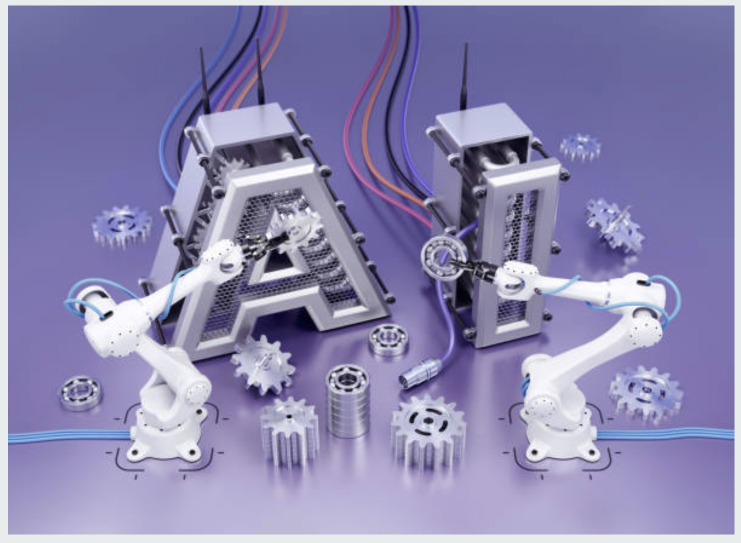
    Miałem przyjemność napisać artykuł dla litewskiej firmy Inveniam, dotyczący tematyki ich rozwiązań AI. Tytuł “Learn how AI already drives sustainability initiatives within the telecom sector

    Całość artykułu w języku angielskim, dostępna również w formie PDF do pobrania na końcu posta.

    Learn how AI already drives sustainability initiatives within the telecom sector

    In today’s rapidly evolving world, the telecom sector plays a pivotal role in connecting people, businesses, and societies. However, the industry’s exponential growth has raised concerns about its environmental impact. Fortunately, the emergence of AI has paved the way for innovative solutions that are revolutionizing the telecom sector and driving sustainability initiatives.

    Current sustainability challenges for the telecom sector

    Let us explore the areas where AI is transforming the industry, enabling significant environmental benefits.

    Enhanced Energy Efficiency

    AI algorithms are optimizing energy consumption in the telecom sector, addressing one of its major sustainability challenges. By analyzing massive amounts of data, AI can identify patterns, predict demand, and optimize network operations. This leads to efficient resource allocation, reducing energy consumption and carbon emissions. Additionally, AI-powered systems can automatically adjust network settings based on real-time traffic, further optimizing energy usage.

    Intelligent Network Management

    AI-driven network management solutions are empowering telecom operators to improve network performance and sustainability simultaneously. Through intelligent automation, AI algorithms can monitor network infrastructure, identify potential issues, and proactively resolve them. By minimizing downtime and optimizing network capacity, AI helps reduce energy wastage and enables more efficient use of resources.

    Predictive Maintenance

    AI-powered predictive maintenance is transforming the telecom sector by preventing network failures and minimizing service disruptions. By analyzing historical data and utilizing machine learning algorithms, AI can identify potential faults and predict maintenance needs. This proactive approach allows telecom companies to schedule maintenance activities, optimize resource allocation, and reduce unnecessary truck rolls. As a result, this not only improves service quality but also reduces carbon emissions associated with emergency repairs.

    Smart Energy Management

    AI’s integration with smart grids and renewable energy sources has the potential to make telecom infrastructure more sustainable. By leveraging AI algorithms, telecom operators can intelligently manage energy flows, optimize renewable energy usage, and dynamically adapt to fluctuations in supply and demand. This integration enables the telecom sector to contribute to the overall stability of the energy grid while reducing reliance on fossil fuels.

    Data-Driven Decision Making

    AI’s ability to analyze vast amounts of data in real-time provides valuable insights for sustainable decision-making in the telecom sector. By leveraging AI analytics, telecom operators can identify energy-intensive areas, optimize routing for energy-efficient networks, and implement targeted energy-saving measures. Moreover, AI-powered data analytics can identify trends, patterns, and customer behavior, enabling the development of innovative services that promote sustainable lifestyles and digital inclusion.

    E-waste Management

    As the telecom sector continues to evolve, the disposal of electronic waste (e-waste) becomes a critical concern. AI plays a crucial role in streamlining e-waste management processes. Through image recognition and data analysis, AI can identify and categorize electronic devices for appropriate recycling or repurposing. Additionally, AI-powered robotics can automate the disassembly process, ensuring safe and efficient e-waste recycling practices, thereby minimizing environmental harm.

    Green Supply Chain Management

    AI can aid in the management of the telecom sector’s supply chain to enhance sustainability efforts. By leveraging AI algorithms, telecom companies can optimize logistics, inventory management, and transportation routes. This optimization helps minimize carbon emissions associated with transportation and reduces waste in the supply chain. Additionally, AI can assist in identifying eco-friendly suppliers and promoting sustainable practices throughout the procurement process.

    More future-proof opportunities

    With daily advancement of AI technology, we identified more fields that can be improved. By leveraging AI in these areas, the telecom sector can further enhance its sustainability initiatives:

    • Network Optimization and Resource Allocation
    • Antenna Placement and Coverage Optimization
    • Green Supply Chain Management
    • Customer Behavior Analysis for Energy Conservation
    • Green Communication Infrastructure
    • Environmental Impact Assessment Conclusion As telecom companies embrace AI-driven solutions, they not only improve their operational efficiency but also contribute significantly to environmental preservation. By harnessing the power of AI, the telecom sector can pave the way for a sustainable and connected future.

    LinkedIn post key insights Key Insights for LinkedIn Campaign:

    • The Telecom sector is experiencing exponential growth, but it also faces sustainability challenges
    • AI is revolutionizing the industry, driving sustainability initiatives; it enables significant environmental benefits
    • AI optimizes energy consumption by analyzing data, predicting demand, and allocating resources efficiently
    • Intelligent network management through AI automation improves performance and sustainability, reducing energy wastage
    • AI-powered predictive maintenance prevents network failures, minimizes disruptions, and reduces carbon emissions In my opinion, these key points highlight how AI-driven solutions address sustainability challenges in the telecom sector. Focusing on them for the campaign will show how AI solutions offer efficiency, reliability, and environmental benefits.

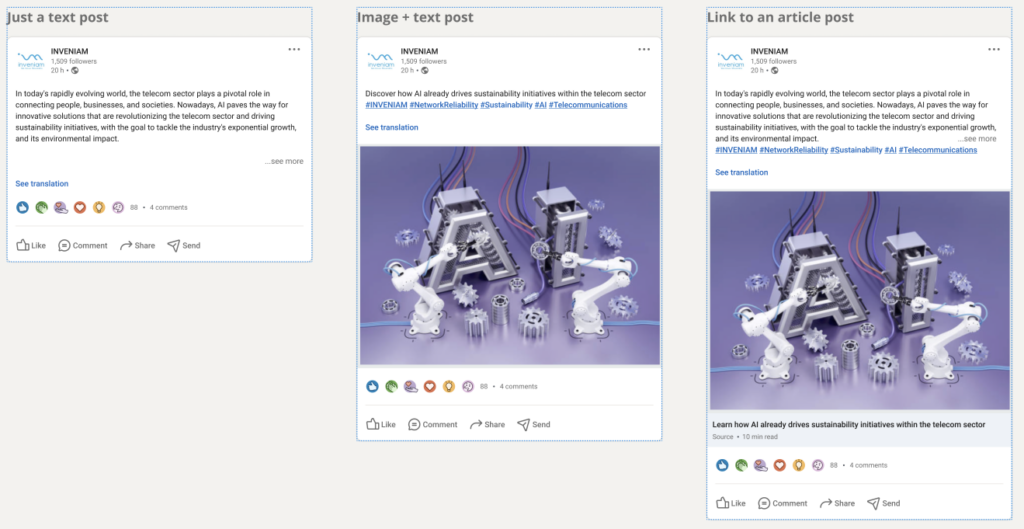
    Proposed graphic solutions

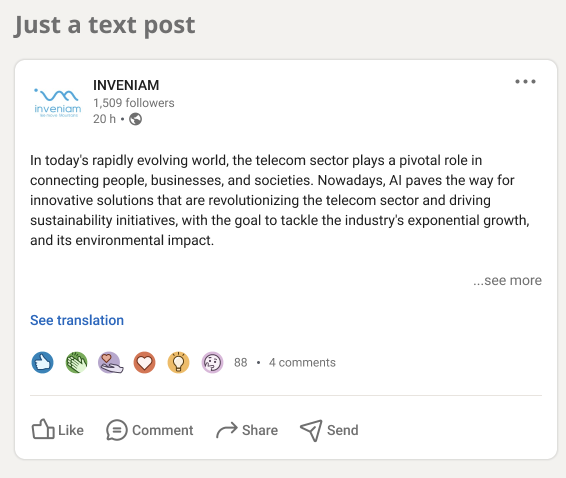
    LinkedIn Posts

    Figma template for the posts


    Download full PDF

  • Analiza i identyfikacja słów kluczowych

    Poniżej dzielę się wynikami mojej analizy dla słów/fraz kluczowych: “boost conversions” oraz “google analytics alternatives”

    Całość projektu jest również do podejrzenia w Canvie, z możliwością płynnego powiększania.